 en
en
 ar
ar de
dePublished at
05/24/2026
Introduction
International conventions and domestic legislations unanimously agree that children are the group most in need of protection and care, and that ensuring their physical and psychological well-being is a top priority for societies and nations alike. At the heart of this care, "healthcare" stands as an inherent right that cannot be compromised by any political, economic, or administrative circumstances. Investing in a child's health from their earliest days is the foundation upon which a healthy and stable society is built.
The Legal and Human Rights Framework for Child Health
According to the International Convention on the Rights of the Child and national laws, the right to health is a universal and indivisible right. Just healthcare systems do not differentiate between children based on their backgrounds or nationalities; a child, as a developing human being, deserves the highest attainable standard of medical and preventive care. Health institutions are obligated to provide these services as a legal and humanitarian duty, rather than a favor or a gift.
Essential Vaccinations: The First Line of Defense
The routine and essential vaccinations provided by the state are the core pillar of preventive medicine and the first line of defense protecting society as a whole from epidemics and infectious diseases. Accordingly, the public health system is designed to be comprehensive and accessible:
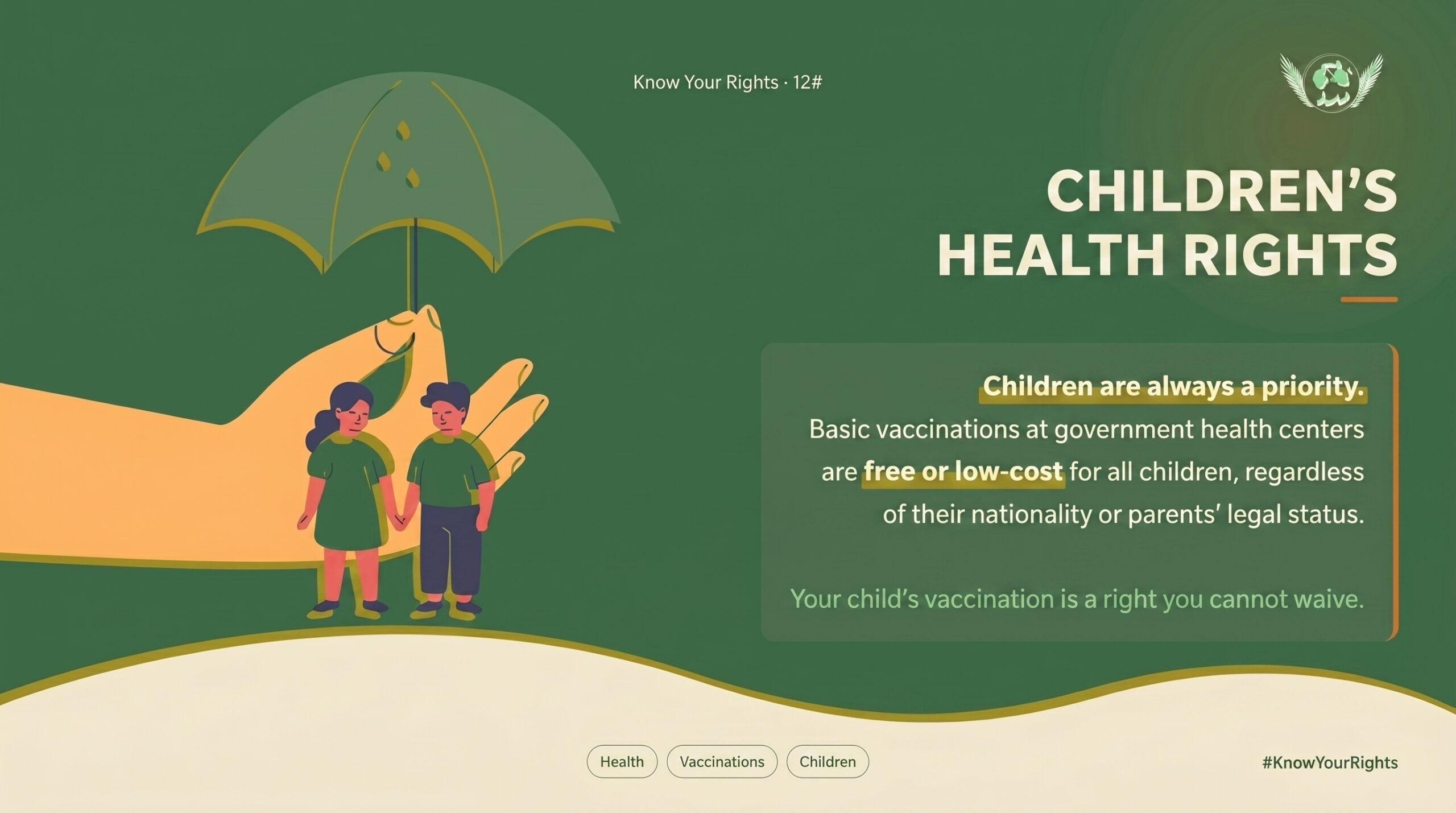
- Free or Nominal Services: Public health offices provide all essential vaccinations free of charge or for a very nominal fee to ensure that no child misses out due to financial constraints.
- Inclusivity Without Discrimination: Public health offices open their doors to all children residing in the country, regardless of their nationality, origins, or even the legal and administrative status of their families.
- Protecting Public Health Security: Vaccinating a migrant or refugee child is a direct protection for the health of local children, as epidemics do not recognize borders or identities.
Responsibility of Parents and Society
Vaccinating a child is not merely a personal choice for parents; it is a legal and moral duty and responsibility toward the child and the society in which they live. This right cannot be waived or neglected under any circumstances. Fear of administrative procedures should never deter parents from visiting public health offices, because the ultimate priority there is the child's life and safety.
Conclusion
In conclusion, caring for children and prioritizing their health remains the true indicator of a society's progress and humanity. Awareness of your child's right to receive necessary vaccinations and medical care is the first step toward securing their future. Public health offices are always open to ensure that no child is deprived of their right to healthy development. Always remember: children come first, and their health is a red line protected by law and humanitarian conventions.